

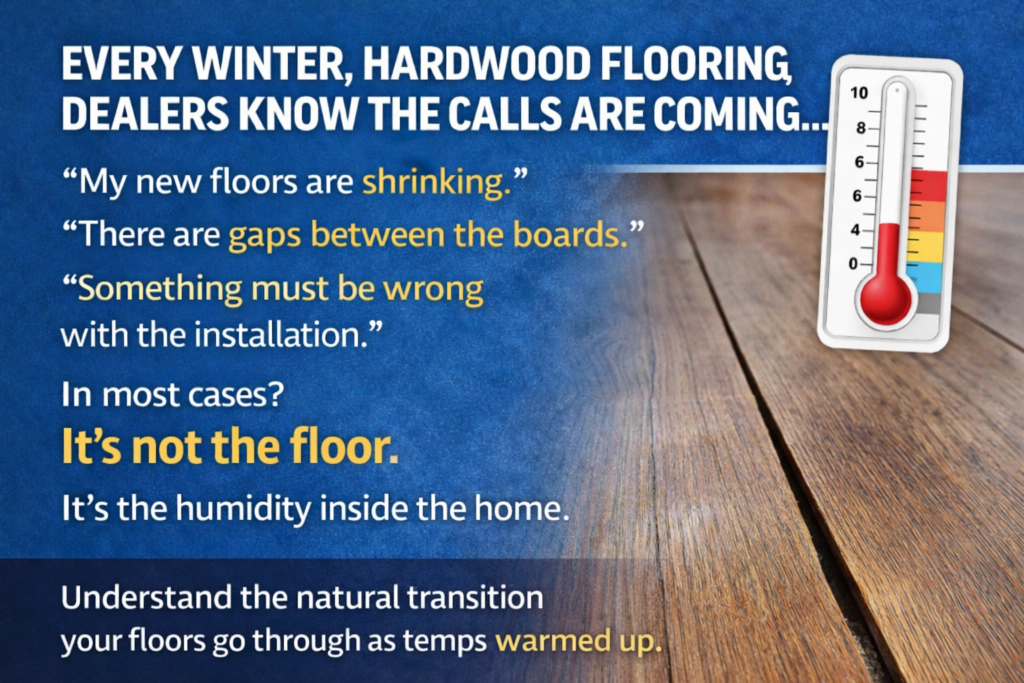
And as we move from winter into spring and summer, hardwood floors go through another natural transition — one that every homeowner should understand.
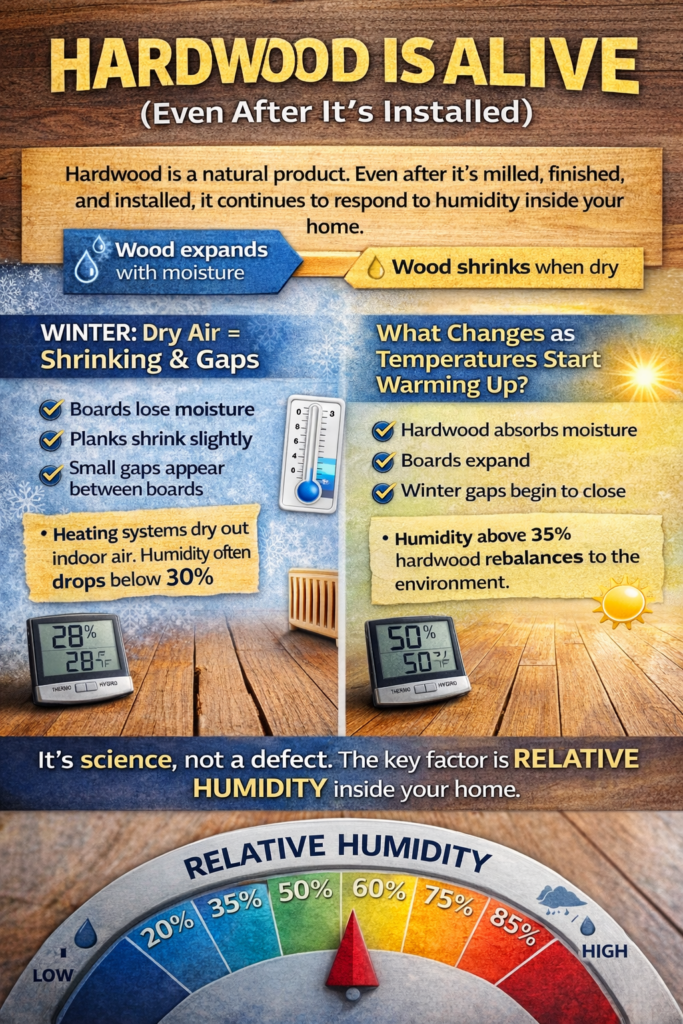
Hardwood Is Alive (Even After It’s Installed)
Hardwood is a natural product. Even after it’s milled, finished, and installed, it continues to respond to its environment.
Wood expands when it absorbs moisture.
Wood shrinks when it loses moisture.
That’s not a defect. That’s science.
The key factor? Relative humidity inside your home.
Winter: Dry Air = Shrinking & Gaps
During winter, heating systems dry out the air dramatically. In many homes, indoor humidity can drop below 30%.
When that happens:
• Boards lose moisture
• Planks shrink slightly
• Small gaps appear between boards
This is seasonal movement. It’s common and typically temporary.
What Changes as Temperatures Start Warming Up?
As spring arrives and temperatures rise, humidity begins increasing — especially here in the Tri-State area where we can go from bone-dry February to humid May quickly.
As humidity climbs:
• Hardwood absorbs moisture
• Boards expand
• Winter gaps begin to close
Homeowners often notice their floors “looking normal again.” That’s because the wood is rebalancing with the environment.
But if humidity rises too much — especially as we move into summer — different issues can appear.
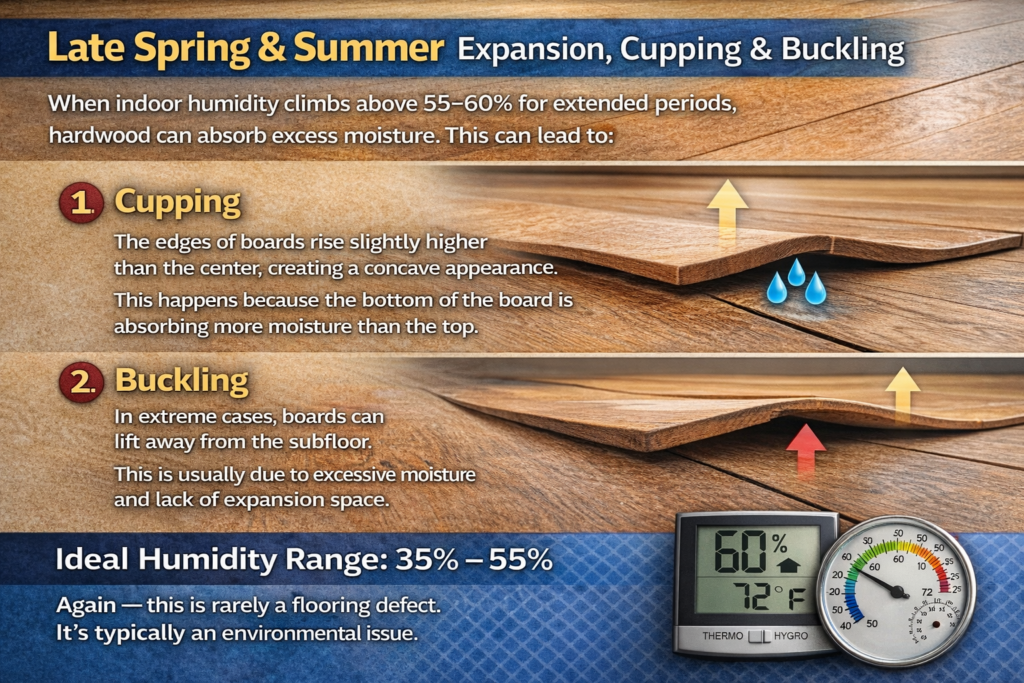
Late Spring & Summer: Expansion, Cupping & Buckling
When indoor humidity climbs above 55–60% for extended periods, hardwood can absorb excess moisture.
This can lead to:
1. Cupping
The edges of boards rise slightly higher than the center, creating a concave appearance.
This happens because the bottom of the board is absorbing more moisture than the top.
2. Buckling
In extreme cases, boards can lift away from the subfloor. This is usually due to excessive moisture and lack of expansion space.
Again — this is rarely a flooring defect.
It’s typically an environmental issue.
Why Spring Is the Most Important Transition Season
As temperatures warm up, your HVAC system shifts from heating to air conditioning. This transition period can create major humidity swings inside the home.
Rapid changes are harder on hardwood than gradual seasonal shifts.
Spring is when homeowners should:
• Check indoor humidity levels
• Service HVAC systems
• Make sure crawl spaces and basements are dry
• Ensure dehumidifiers are functioning
This is preventative flooring care.
The Ideal Humidity Range for Hardwood Floors
Hardwood floors perform best when indoor humidity stays between:
35% – 55% relative humidity
Consistency is more important than perfection.
If your home maintains stable humidity within this range year-round, you will dramatically reduce seasonal movement.
The Big Myth: “Something Must Be Wrong with My New Floor”
Most seasonal floor movement is normal.
In fact, if hardwood never moved at all, that would be concerning.
Professional installation includes:
• Proper acclimation
• Expansion gaps
• Moisture testing
• Industry-standard spacing
What homeowners experience during seasonal changes is wood behaving exactly as it should.
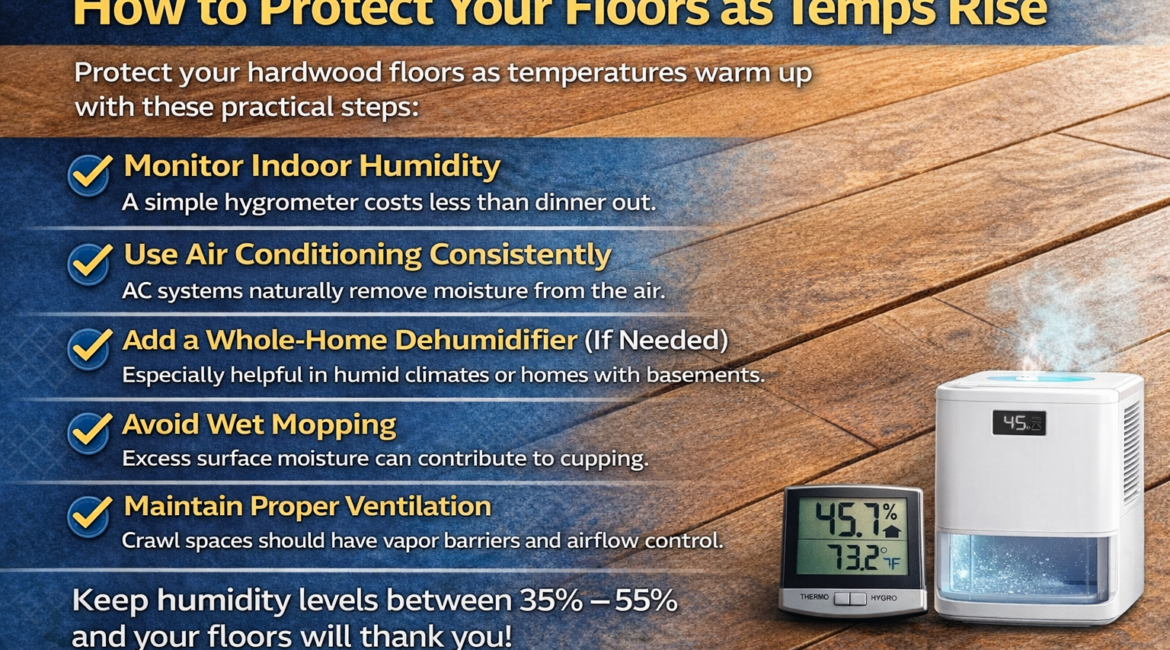
How to Protect Your Floors as Temps Rise
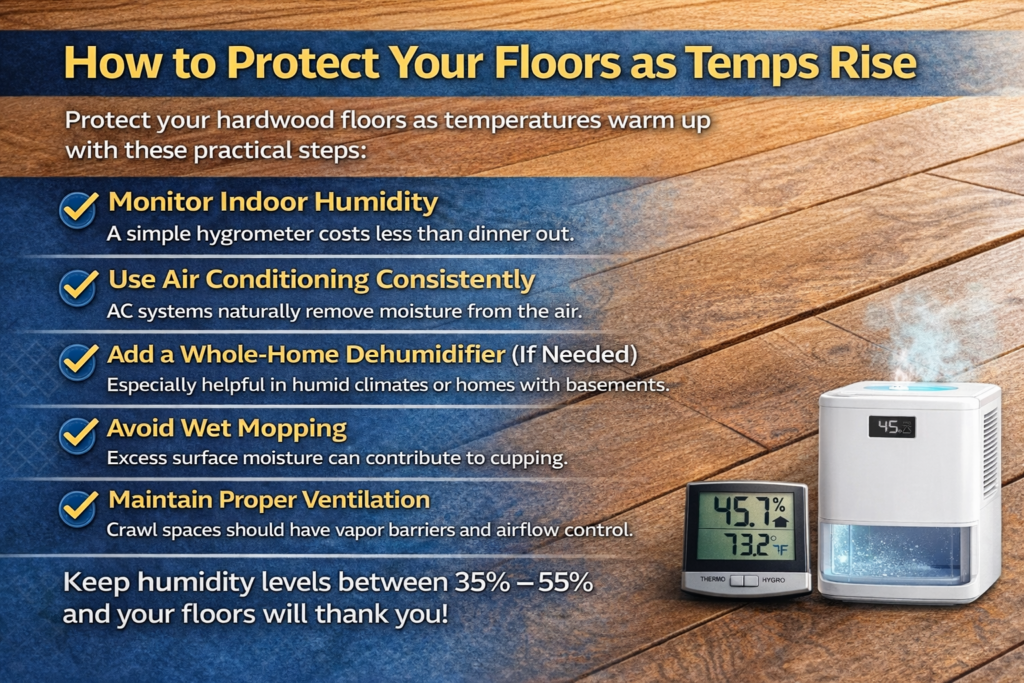
Here are practical steps homeowners can take as we head into warmer months:
✔ Monitor Indoor Humidity
A simple hygrometer costs less than dinner out.
✔ Use Air Conditioning Consistently
AC systems naturally remove moisture from the air.
✔ Add a Whole-Home Dehumidifier (If Needed)
Especially helpful in humid climates or homes with basements.
✔ Avoid Wet Mopping
Excess surface moisture can contribute to cupping.
✔ Maintain Proper Ventilation
Crawl spaces should have vapor barriers and airflow control.
Final Thoughts
Hardwood floors are an investment — and a natural product.
As temperatures warm up, expect change. Expect movement. Expect adjustment.
That doesn’t mean something is wrong.
It means your floors are responding to the environment.
With proper humidity control, you can enjoy beautiful hardwood floors for generations — through every season.